Speech as Music
Psalm 150
Hallelujah!
Praise God in His sanctuary.
Praise Him in His mighty heavens.
Praise Him for His mighty acts;
praise Him for His excellent greatness.
Praise Him with the sound of the horn;
praise Him with the harp and lyre.
Praise Him with tambourine and dancing;
praise Him with strings and flute.
Praise Him with clashing cymbals;
praise Him with resounding cymbals.
Let everything that has breath praise the LORD!
Hallelujah!
(From the ESV)
The Foundation of Speech
Perhaps the most common type of treatment done by SLPs is that which targets articulation impairments. So, what do the words above have to do with speech therapy? Read through Psalm 150 again. See its progression?
- Praise - “Hallelujah!”
- The places to praise God
- In His sanctuary - the people that are under his protection and have access to his presence
- In His mighty heavens - all the divine hosts. This also shows that the very heavens are His to command.
- The Reasons to praise God
- His mighty acts
- His excellent greatness
- How to praise him
- Instruments of various kinds - horns, harps, lyres, tambourines, strings, flutes, cymbals
- Dancing
- The exhortation to praise God
- “Everything that has breath” - Meaning sing, shout, speak it
- Praise - “HALLELUJAH!”
See? Hear the rising music to the final crescendo? See how it elevates the verbal praise in the descriptive trappings of an ensemble? See how that provides first principles for modern speech therapy? No? Let me explain.
You can rightly view your voice as an instrument. The ultimate instrument, even. No horn? No Lyre? Not a good dancer? That’s ok. Anything that has breath can make the music of worship. Say it with me. “Hallelujah.” There, you played the instrument designed by God’s own finger. You are a musician.
Singers know the instrumentality of the voice. However, even people gifted with a great singing voice don’t often think of their everyday speech as a type of music produced by an instrument. Yet it is. Our voices operate under the exact same principles that govern woodwinds, harps, and horns. We produce vibrations at different frequencies and blend them together to alter the state of the listener. Much more could be said on this, both technically and theologically.
Here is the therapeutic advice tied to understanding our voices as the ultimate instrument: treat it like an instrument.
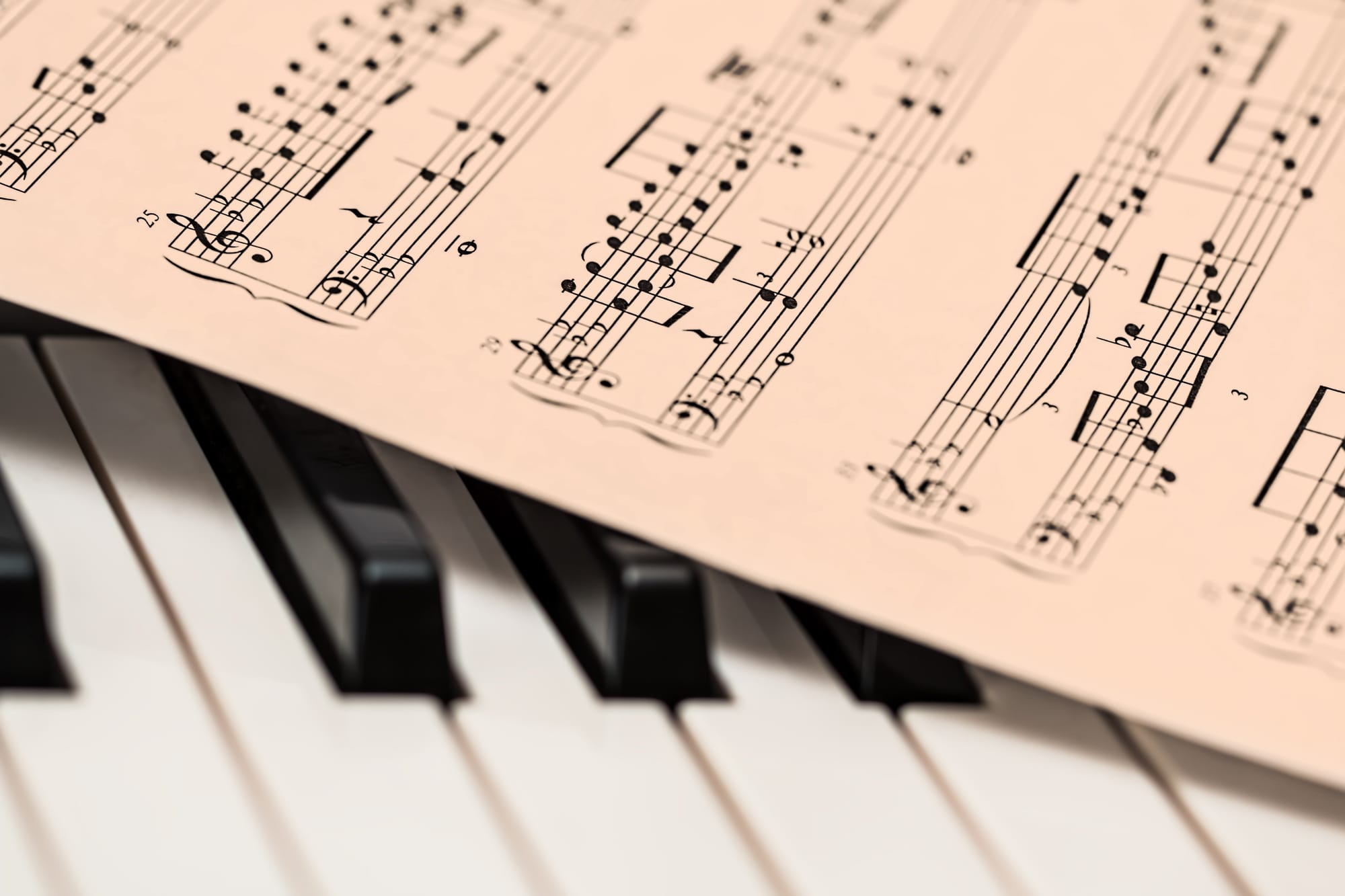
A child learning piano must learn to hit the right keys in the right order. The notation on the music sheet will not adapt to his errors, no, he must adapt the movement of his body to the notation. The same inflexibility applies to speech. Why can’t your son say /r/ correctly? Why does she struggle with “sh” sounds? Because no one has ever taught her how to “play the instrument right.” If the pupil does not stretch his hands to play the keys in sequence, the note will not sing out correctly. In the same way, if the patient does not stretch his tongue into the right position, the phoneme will not come out as intended.
Now this can happen due to many different reasons such as muscle weakness, nerve damage, lack of knowledge, and countless others. However, if you approach the erred phoneme or the stubborn phonological process as something other than an instrumental difficulty, you will struggle to provide a solution. Every therapy session, imagine you are a music tutor. Teach the child “how to place his fingers on the right keys.” Don’t worry about producing the right sounds, don’t even say the name of the “letter” you are targeting. Instead, let the music flow from the proper playing of the instrument. If you guide the patient to make the right shape with his mouth, the sound will come out quite apart from intention or will. Because that’s how instruments work.
First things first
Now, don’t forget - instruments themselves can be broken. The best organist in the world cannot play the instrument if there are no pipes. For the purposes of differential diagnosis, first isolate the location of the musical breakdown. Is it in the use (musician) or the form (instrument)? Once that is done, you can start assessing why the error is there. A simple lack of knowledge will present itself very differently than childhood apraxia of speech.
Never grow weary of doing what is right
And, no matter what you do, always treat the musician (a child made in God’s image) and the instrument (their voice, God’s creation) with the dignity it deserves.