Accidents and Essentials
Across the Ages
What do the The Lion, the Witch, and the Wardrobe (1950), Beowulf (~700 AD), and the Epic of Gilgamesh (~2100 BC) all have in common? And why should a Christian bother reading ancient pagan stories alongside modern western stories? These two questions can be answered in the same way*. Before I answer, though, consider the point of story. Why tell stories at all? And what are stories made of? What are the components that make a story? The answers to the above questions actually also answer the question: “Why are movies and shows so bad these days?”
Fundamentally, all stories are made of the same kind of stuff. Modern scholarship uses terms like “monomyth” or “the hero's journey” to describe the elements and patterns observed in Greek myths, Chinese legends, Medieval tales, dime novels, superhero comics, and modern literature. Despite the vast differences in time period and content, there are recognizable, ever-present components in every story ever written.
You can think of it like that old philosophy discussion “what is a chair?” Across the span of history, geography, and culture every conceivable material has been used in every conceivable shape to form a chair. Is a horse a chair? You sit on it, it has legs. Rather than defining it by features, take a step back and define it by pre-requisites. If there were no humans, there would be no chairs. Therefore human observation is required, as is human assignment of purpose. It must be material and it must be used for sitting. And, like all things, it must be definable by a specific set of aspects primarily. A horse is not a chair because, while you can use it for sitting, it is primarily a horse.
What does all this have to do with story?
The Keystone Component of Story
Prose, word choice, plot, dialogue. These are the common elements of modern literature we interact with. Some will even dare to delve into “themes,” though this word is often used by post-modernists in relation to “trauma, self-healing, and deconstruction.” Symbol is the keystone of story. Stories are, by nature, a vessel by which information is conveyed. Even in a “literal” sense, stating the information plainly, the words spoken are not the thing itself. Saying “That is a squirrel” conveys information about the reality. The words are not the reality but they do truly reflect the reality.
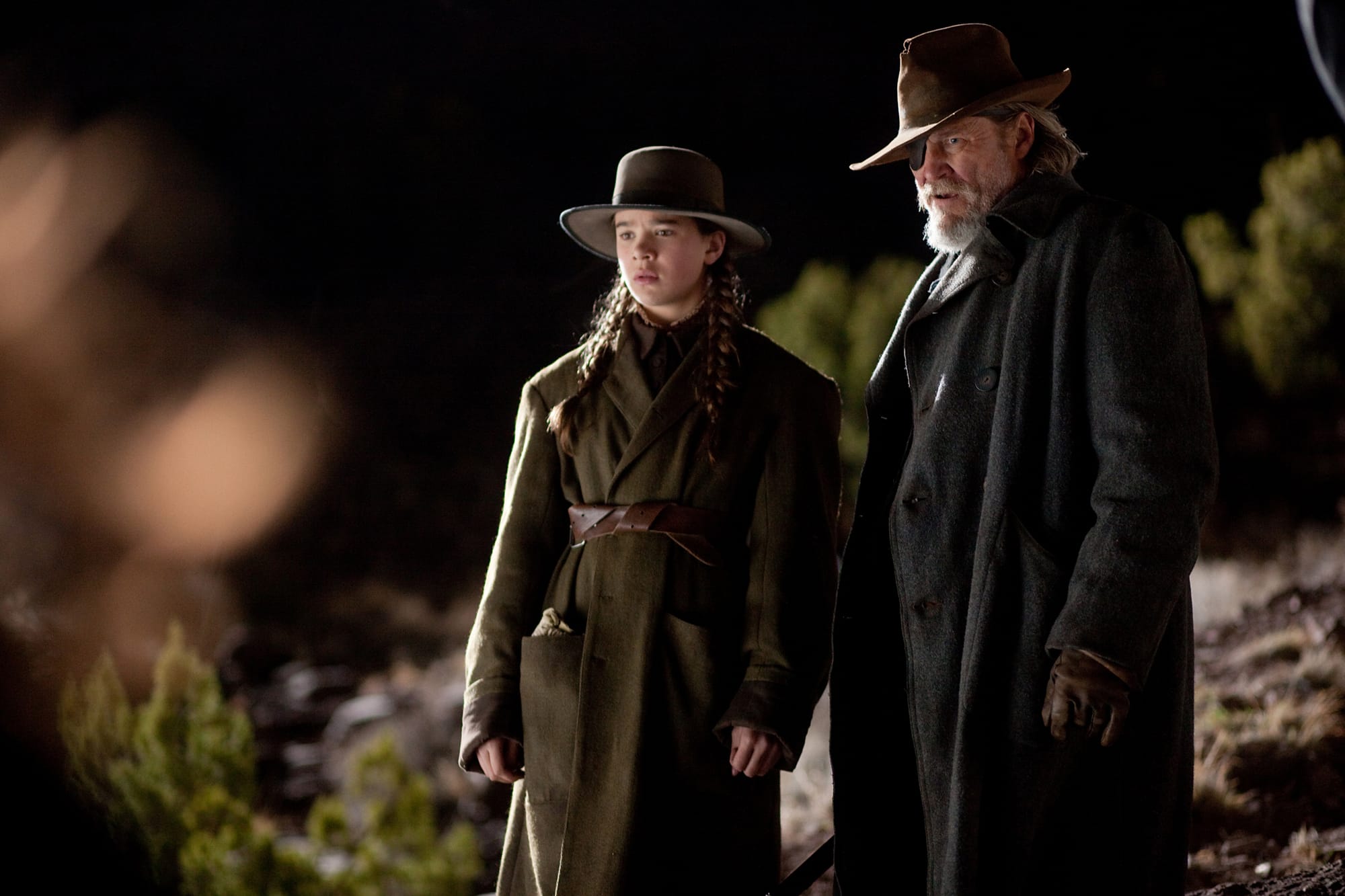
Because stories are not reality unto themselves, but instead convey to us a reality, we can view every story as twofold: 1) The accidents/incidentals/hypostatic properties of the story and, 2) the essential properties of the story. As a simple example, consider the story True Grit, first experienced as a novel written by Charles Portis in 1968. In 1969, True Grit was made into a feature film starring John Wayne and Kim Darby. In 2010 the novel was adapted a second time to the big screen, this time starring Jeff Bridges and Hailee Steinfeld**.
Follow along because it gets a little layered here.
John Wayne played Rooster Cogburn and so did Jeff Bridges. The actors here can be understood as accidents, while Cogburn and his adventures are the essence. The face is swapped out but the character - the person of Rooster Cogburn - is still somehow visible in both cases. Darby and Steinfeld, likewise, though different in appearance, acting skill, voice, etc. both communicate the character Mattie Ross. The emphasis is changed, details altered, but the essence remains. At this level, the actors are the accidents and the characters would be the essence.
Now, let’s go one layer deeper. The cinema and the novel are two different artforms, yet they can communicate the same story. That is because the mode of communication (an audio-visual experience vs decoding written words on a page) is itself an accident and not essence. While the exact details are rebalanced and emphasis is shifted, the page and the theatre are both telling you the same information. The essence remains. Movies and books are the accident while the story is the essence.
One more layer. Mattie, the fictional character, is herself a symbol. In fact, what she symbolizes is stated plainly by the author via her own words
"You must pay for everything in this world one way or another. There is nothing free, except the grace of God"
Mattie is a lesson for us. She is a juxtaposition personified so that we can see two profound realities.
First, all things cost and every cost must be paid out. Her father was murdered and the law won’t pursue the murderer. Yet, by the end of the story, the murderer is found and the blood debt is paid. Mattie finds herself paying the cost of justice and vengeance, losing her arm after being bitten on the hand by a snake. Just think about those elements. The hand is the symbol of action and capability. The snake is the enemy of mankind, the one who leads us to sin, and his venom is the reward you get in the end. The density of the symbolism here is fantastic.
Second, is the free grace of God. Mattie survives her ordeal by the great personal effort of another and she brings justice to her father in the most unexpected and unlikely of ways. She embodies the persistent widow described in Luke 18. She directly addresses the moments in her journey that are providential with open faith and understanding that God is the one doling out what she needs as she needs it.
Mattie is the accident, the symbol, the concepts of sin, debt, payment, vengeance, justice, and providence found beneath are the essence, the fundamental realities. Rooster Cogburn, the murderer (Tom Chaney), and the rest of the characters are each representing different real things to us.
Answer the Question
So what does True Grit have to do with the questions asked initially? Well, let’s look at some of the symbolism found in the three stories mentioned in the opening sentence.
- The Lion, the Witch, and the Wardrobe: Aslan, the Second Person of the Trinity in the form of a Lion, intercedes for his people oppressed by an otherworldly horror. He lays his own life down for the sake of another and in the process frees his own people from the perpetual winter (a symbol of death).
- Beowulf: A hero of great renown travels abroad to slay the demonic monster descended from Cain named Grindel. Literally Grind-El. As in grind to dust, crush/destroy + "El," the shorthand name for God (found in names like Elijah and Elisha). Beowulf grows in renown and wisdom. He then sinks down to the underworld to battle with the demon taking vengeance on the people in their newfound freedom. Then, once he is king, he goes out to kill the dragon that is the final enemy of his people. They fight and Beowulf is mortally wounded, giving his life so that his people may be saved.
- The Epic of Gilgamesh: Gilgamesh, the unmatched ruler of a vast city defends his people against “the bull of heaven,” an all-destroying beast sent by the pagan gods. Enkidu, the man he considers closer than a brother, his true equal and match, is mortally wounded and dies fighting the beast. Gilgamesh descends through the ultimate night, an endless sleep, and the sea of death, eventually finding “the one who found life.” He learns that everlasting life can only be found by eating from a plant that is now at the bottom of the sea. Just when Gilgamesh finds the plant, a serpent steals it, dooming Gilgamesh to death.
These are extremely brief summaries of dense stories. Hopefully you can already see the overlap. Even the ancient, pre-Christ pagan story echoes with the things we know to be true. Sacrifice, the King, oppression, death, the serpent. Even the blurry, distorted version we see in the pagan story speaks to us about the same underlying truths, the things that are most real. Namely, of God the Son, the fulcrum of history and creation. All things are to Him and for Him and from Him. Any goodness or truth found across this broad world finds the source of goodness in the Son. There is no other source of goodness or truth.
When we read, watch, or hear the stories mankind shares, the accidents change but the essential parts do not. Different stories communicate a different set of these essential realities to us via different accidents, but they cannot invent any new realities. Even a pagan story can be sifted for the same elements.
This also explains why modern storytelling is so bad. The writers in Hollywood know that the building material of “story” is representative of fundamental realities. Realities they hate. They tried making evil, wicked, or disturbing stories, though these ultimately failed because they, in a mirrored way, still proclaim the underlying truths, albeit in rebellion and protestation. A negative form of something necessarily entails the positive form if even by implication. Once they learned this lesson, they moved on to attempting to write stories that are utterly deconstructed, empty, void. There are no heroes, no lessons, no good guys or bad guys, everyone is “morally grey.” Even the color grading in the film is bluish grey, washed out. Nothing means anything. Because if anything had meaning, they’d have to admit they are showing symbols that mean something. Meaning would be real and they’d be beholden to it. Rather than live in the created order and recreate that concept in their own stories, retelling the glory of the creator, they descend willfully into the void, desiring to return to the nothingness of the waters before creation was. They unmake. Because they are like their father, they fight ours.
So, I say this: read, listen, and watch as it is wise. Do not seek out willfully sinful creations but do not despise the stories that unknowingly (sometimes knowingly) “worship the unknown god.” Find the symbols that communicate the goodness of God everywhere that you can. Enjoy and give glory to God that he shines in all that is fair.
~~~~~~~~~~~~~~~~~~~~~~~~~~~~~~~~~~
*There are obviously many answers to these questions, this is but one for your consideration.
** This second adaptation is objectively the better version and a genuinely great movie.